Finding Inner Peace While Living with Cancer
Throughout the cancer journey, there are visible treatments (surgery, chemotherapy, radiation therapy, immunotherapy) and others—more subtle—that work within the intimate realm of the body and mind.
Meditation is one of those complementary approaches that, while not replacing medical care, support patients as they navigate what is often a difficult journey. For several years now, meditation in oncology has been attracting growing interest among hospital staff and researchers.
Reduction in stress, improved sleep, and reducedanxiety: the observed benefits open up a new way of approaching care—one that is more holistic and more humane as well.
Understanding Meditation in Oncology
Meditation refers to a set of practices aimed at focusing one’s attention on the present moment, with kindness and without judgment. In oncology, it is primarily used to help patients better cope with the psychological and physical effects of the disease.
Among the best-known approaches are:
- Mindfulness meditation.
- Mindful breathing exercises.
- Body scan.
- Some guided visualizations.
- Compassionate Meditation.
These practices may be offered at hospitals, in specialized centers, or at home through audio sessions and dedicated apps.
The goal is not to “think positively” at all costs or to erase suffering. Rather, it is about learning to experience cancer, by creating a space of calm amid the uncertainty.
Cancer and Stress: A Deep Connection
A cancer diagnosis turns your life upside down. With just a few words spoken in a doctor’s office, time takes on a different quality. Your sense of reality wavers. Fear sets in: fear of pain, treatments, the future, and sometimes death.
In addition to this, there are often:
- Chronic fatigue.
- Disorders of the sleep.
- Pain.
- Relationship difficulties.
- A loss of confidence in one's own body.
Prolonged stress can exacerbate these symptoms and affect quality of life. This is precisely where meditation comes into play.
By gently bringing attention back to the breath or bodily sensations, it helps break the cycle of anxious thoughts. The nervous system gradually regulates itself. At times, the body steps out ofits state of constant alertness .
The Benefits of Meditation for Cancer Patients
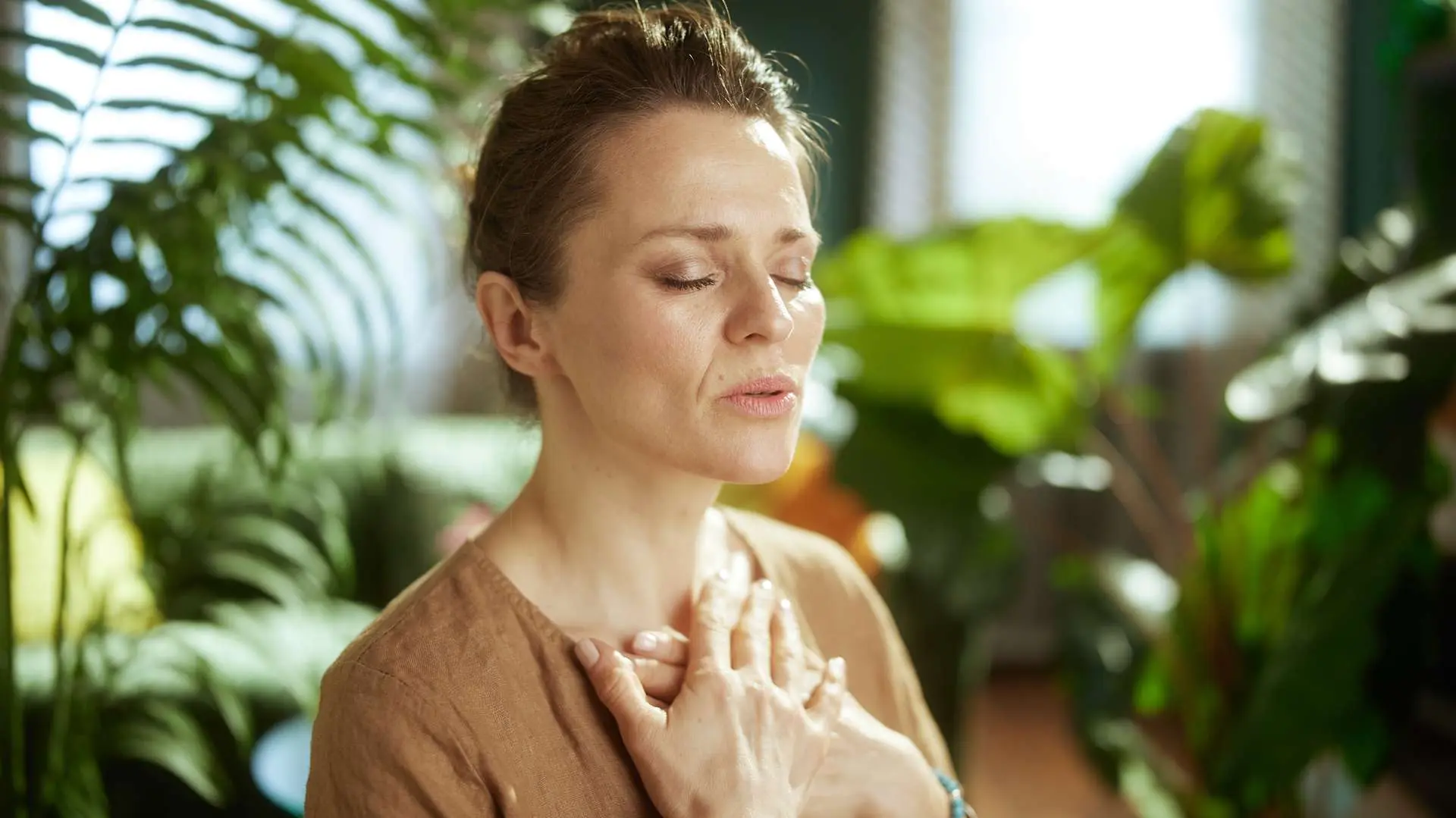
Reducing Anxiety and Depression
Mindfulness helps us better accept difficult emotions without letting them overwhelm us. Many patients describe a sense of inner calm after a few weeks of regular practice.
Catastrophic thoughts gradually lose their hold. The mind slows down. A sense of emotional stability may return, even in the midst of treatment.
Improved Sleep
The episodes of insomnia is common in oncology. Between the side effects of treatment and nighttime worries, nights can sometimes become fragmented and exhausting.
Meditation exercises before bedtime promote physiological relaxation. Conscious breathing for a few minutes can help the brain break out of the cycle of hypervigilance.
Reduction in pain and fatigue
Some studies suggest that meditation alters the perception of pain. It does not eliminate the physical sensation, but it changes the way we relate to it.
Many patients also report better management of treatment-related fatigue, particularly thanks to deeper periods of mental rest.
Rediscover a sense of presence
Cancer can make you feel as if you’ve been stripped of your own body. Doctor’s appointments, treatment plans, and tests set the pace of daily life.
Meditation can sometimes help us reconnect with a sense of being present with ourselves. Just a few minutes are enough to return to our breath, to a sensation, to a simple and immediate reality: simply being here.
Mindfulness Meditation: A Leading Approach
In oncology, the most widely studied method is mindfulness meditation, particularly through MBSR (Mindfulness-Based Stress Reduction) programs.
Developed by American biologist Jon Kabat-Zinn, this approach combines meditation, breathing, and body awareness.
The sessions are generally accessible even to beginners. No religious beliefs are required. The practice is based primarily on the mindful observation of the present experience.
Today, several hospitals are incorporating mindfulness workshops into supportive cancer care.
How can you start meditating while you have cancer?
You don't have to meditate for a long time to feel the benefits. Just a few minutes a day can already be a valuable source of support.
To get started:
- Choose a quiet place.
- Get comfortable.
- Focus on your breathing.
- Embrace your thoughts without fighting them.
- Gently return to your breath.
Consistency is more important than duration. Five minutes a day practiced gently is often better than an occasional long session that feels like a chore.
Patients can also work with an instructor trained in therapeutic meditation or participate in group sessions offered in a hospital setting.
A more patient-centered approach to medicine
The rise of meditation in oncology reflects a profound shift in healthcare. Long focused solely on the disease, contemporary medicine is now paying greater attention topatients’ quality of life, emotions, andmental well-being .
Meditating while battling cancer does not mean escaping reality. Sometimes it’s the opposite: learning to stay present despite fear, despite the uncertainty, despite vulnerability.
In the silence of mindful breathing, some find a subtle yet essential source of support—a way to navigate the ordeal without losing themselves entirely in it.