The 5 Steps to an Effective Body Scrub
Body exfoliation helps remove dead skin cells, smooth out rough areas, and restore softer skin. To be effective, however, it must be done gently.
Which product should you choose, on which skin type should you apply it, and how often should you use it? Here are the essential steps, with a focus on Sun & Sia’s organic coffee exfoliating soap, available at Santi-shop.
Why Exfoliate Your Body?
The skin renews itself naturally, but dead skin cells can build up on its surface. Exfoliation helps remove them mechanically and generally leaves the skin smoother and more even.
Exfoliation also prepares the skin to receive a moisturizing or nourishing treatment. It can be beneficial before hair removal, as it helps remove dead skin cells that can contribute to ingrown hairs.
However, exfoliation should never be harsh. The gentleness of the motion is more important than the pressure applied.
Step 1: Prepare the skin
Start by taking a lukewarm shower to remove impurities and prepare your skin. Avoid water that is too hot, as it can make your skin even drier.
Clean your body, then rinse it off. It’s best to exfoliate on damp skin: the product spreads more easily, and the massage feels more comfortable.
Step 2: Choose a suitable exfoliant
Mechanical scrubs contain granules that exfoliate the skin through massage. Other products use acids or enzymes.
For a simple shower routine, the exfoliating soaps we offer at Santi-shop combine cleansing and exfoliation.
Step 3: Gently massage
Lather the soap in your hands or directly on your body.
Next, make small circular motions, starting with your legs and gradually working your way up.
Apply a little more pressure to the areas that are naturally rougher:
- Elbows.
- The knees.
- Heels.
- The thighs.
- The buttocks
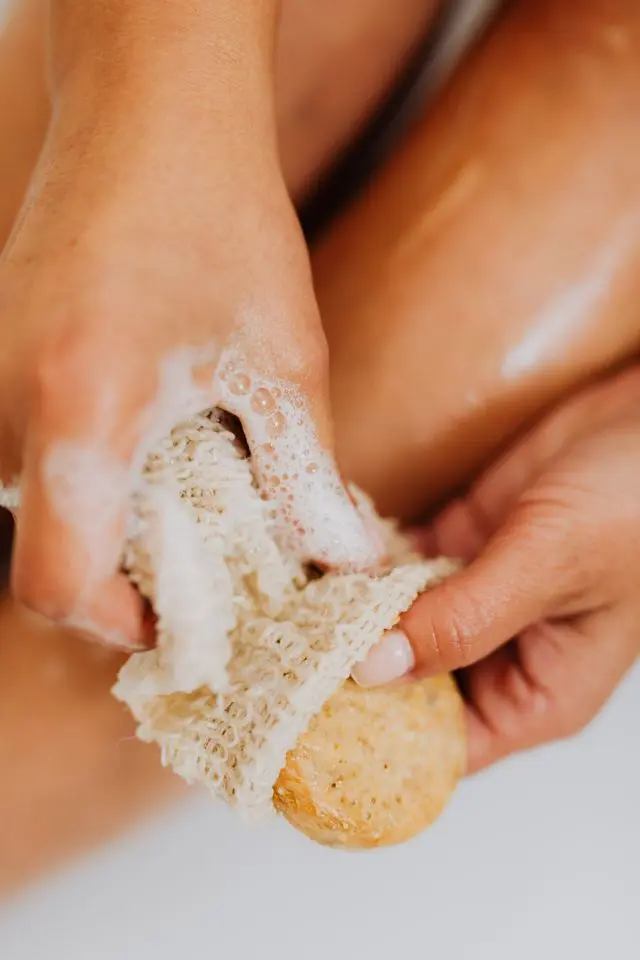
On sensitive areas or areas with thin skin, reduce the pressure and duration of the massage. There’s no need to scrub hard. Excessive pressure can cause redness, tightness, or discomfort. The exfoliating beads are already doing their job; the massage should remain light to moderate.
Exfoliation and Cellulite
Exfoliating massage can be incorporated into a routine for areas where the skin appears uneven or dimpled. Our exfoliating soaps can help smooth the skin’s texture and temporarily improve the appearance of areas prone to cellulite.
However, it's important to be realistic: exfoliation doesn't make cellulite disappear. It can only help make the skin softer and give it a more even appearance for a while.
Step 4: Rinse thoroughly
After the massage, rinse thoroughly with lukewarm water. Make sure there are no grains left in the folds or hard-to-reach areas.
Avoid very hot water, which can make your skin even drier.
Step 5: Moisturize after exfoliating
Dry off by gently patting your skin with a towel—don't rub. Then apply a suitable body lotion, cream, or oil.
This step helps maintain the skin's comfort and completes the routine.
Moisturizing is especially important if you have dry or sensitive skin.
How often should you exfoliate your skin?
How often you exfoliate depends on your skin's sensitivity. In general, one to two exfoliations per week at most are commonly recommended for the body.
If your skin becomes red, tight, or burning after treatment, space out your sessions and switch to a gentler routine. There’s also no need to use multiple exfoliating products at the same time.
Never exfoliate irritated, damaged, or inflamed skin.
The Ritual to Remember
To get the most out of your body scrub, just follow these simple steps: dampen your skin, apply a suitable exfoliant, massage gently, rinse thoroughly, and moisturize.
An effective exfoliator doesn't have to be harsh. Just a few minutes are all it takes to turn a shower into a true pampering experience…