Our Tips for Using Your Essential Oil Diffuser
Diffusion is one of the simplest ways to enjoy the scents of essential oils at home. Depending on the essential oils you choose, it allows you to create a relaxing, fresh, invigorating, or warm atmosphere without applying the essential oils to your skin.
But “natural” doesn’t mean you shouldn’t take precautions. The choice of diffuser, the number of drops, the duration of diffusion, and maintenance all directly affect the quality of the experience. Here are all our tips for using an essential oil diffuser properly and keeping your diffuser in good condition.
How do you use an essential oil diffuser?
There is no single set of instructions that applies to all devices. Before using your essential oil diffuser for the first time, be sure to consult its instruction manual, as the amount of water oressential oils varies depending on its technology and tank capacity.
Following the manufacturer's instructions carefully will:
- To ensure even distribution throughout the room.
- To prevent an excessive concentration of aromatic substances in the air.
- Do not waste essential oils.
- To protect the device's components.
- To extend the diffuser's lifespan.
Before you begin, place the device on a flat, stable surface, away from electrical appliances, heat sources, and furniture that is sensitive to moisture.
Also, avoid placing the diffuser too close to your face or in a poorly ventilated area.
The diffuser should always be kept out of the reach of children and pets. After each use, be sure to air out the room for a few minutes.
Essential Oil Diffusers: Which Technology Should You Choose?
To learn how to use an essential oil diffuser, you must first understand how it works. Each type of diffuser has its own unique features, advantages, and recommended uses.
The ultrasonic diffuser
The ultrasonic diffuser operates without water and generally without heat. A stream of air transforms the essential oils into fine particles that are dispersed into the air.
This technology provides intense diffusion and is particularly well-suited for living rooms and large spaces. Essential oils are poured directly into the glass container, following the recommended amount listed in the instructions.
Since the nebulizer is powerful, it’s best to start with a short, low-intensity session and then adjust the setting based on the room’s size. The glassware should be cleaned regularly to prevent residue buildup.
The ultrasonic or mist diffuser
The ultrasonic diffuser has a reservoir into which water and a few drops of essential oil are poured. A vibrating membrane produces a cool aromatic mist that disperses into the air.
The number of drops depends on the tank's capacity and the manufacturer's recommendations. For a small device, a few drops may be enough. It's best to start with a small amount rather than create a scent that's too strong.
Quiet and often equipped with ambient lighting, the ultrasonic diffuser is suitable for a bedroom, an office, or a medium-sized room. Its mist slightly increases the humidity near the device; therefore, avoid placing it directly on a delicate piece of furniture or under a shelf.
The Ventilation Diffuser
The ventilation diffuser directs a stream of air onto a pad saturated with essential oil. Simple, durable, and generally compact, it is particularly well-suited for small spaces.
It can be used in an office, a car, or near a relaxation area. The mist is lighter than that produced by a nebulizer.
The Gentle Heat Diffuser
The gentle-heat diffuser gently warms essential oils to promote the evaporation of their aromatic molecules. Quiet and easy to use, it is best suited for small rooms.
Choose a device designed specifically for essential oils and equipped with temperature control. Avoid pouring essential oil directly onto a radiator, light bulb, candle, or any other heat source not intended for this purpose.
The choice depends mainly on the size of the room and the desired intensity:
- For powerful diffusion in a large room: a nebulizer.
- For a light mist and a relaxing atmosphere: an ultrasonic diffuser.
- For an office or a small space: one model per vent.
- For simple and quiet use: a gentle-heat diffuser.
How to Care for Your Diffuser
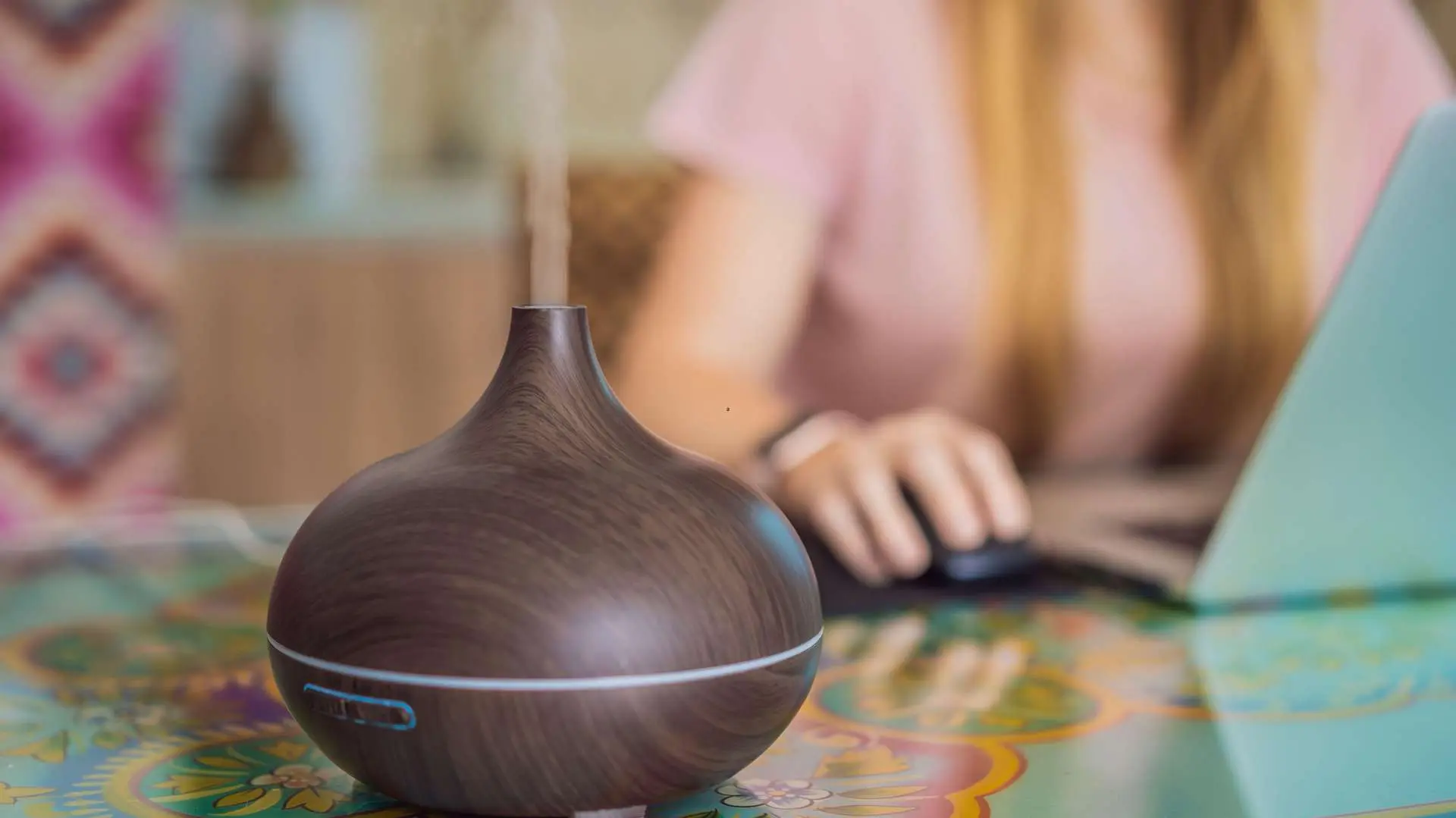
Regular maintenance of your essential oil diffuser prevents residue from building up and affecting future use. It also helps protect the device’s motor, membrane, or glass components. The cleaning method varies by model.
Cleaning an Ultrasonic Diffuser
After use, unplug the appliance, empty any remaining water, and gently wipe the reservoir with a soft cloth. Do not let water sit in the reservoir for several days.
A more thorough cleaning should be performed according to the instructions in the user manual, especially around the ultrasonic membrane. Never submerge the device’s power base.
Cleaning a ultrasonic diffuser
The glass components of a nebulizer can gradually become clogged, especially after diffusing thick or resinous essential oils.
According to the manufacturer's recommendations, it is generally possible to run the device for a few minutes with a small amount of alcohol suitable for cleaning, and then let the glassware dry completely.
Mistakes That Can Damage a Diffuser
Never add vegetable oil to a diffuser: it is too viscous and can clog the tubes or damage the diffusion system.
Use only essential oils that are suitable for diffusion. Some thick, resinous, or pigment-rich oils may leave more residue.
This doesn't necessarily mean they're prohibited, but they require more frequent maintenance and must be compatible with your device.
Also, do not exceed the maximum water level for an ultrasonic diffuser, and never operate the device when it is empty, unless the user manual specifies otherwise.
How long does a diffuser last?
Essential oils should not be diffused continuously for several hours. Excessive concentrations of volatile substances can cause discomfort, eye or respiratory tract irritation, coughing, headaches, or nausea.
For everyday use, intermittent diffusion for 10 to 20 minutes is generally sufficient to scent a room.
However, the exact duration depends on the device’s power, the size of the room, and the essential oil used. Always follow the recommendations on the bottle and in the diffuser’s instruction manual.
Here are a few best practices to help you use essential oils more safely:
- Start with a small amount of essential oil.
- Don't stream all day long.
- Ventilate the room regularly.
- Stop the broadcast immediately if you feel uncomfortable.
- Do not leave a device running unattended, unless it is designed for that purpose and equipped with an automatic shut-off feature.
Can you diffuse essential oils in a bedroom?
In a bedroom, diffuse for a short time before bedtime, then turn off the diffuser and air out the room a little. It’s best not to diffuse all night long or place the diffuser near the bed.
To keep insects away, diffusing essential oils is not a substitute for recognized protective measures, such as mosquito nets. According to the French National Health Insurance, their effectiveness against mosquitoes generally lasts less than 20 minutes.
Diffusing Essential Oils and Children
ANSES advises against the use of essential oils in children without prior consultation with a healthcare professional. Precautions vary depending on the child’s age, the specific essential oil used, its composition, and the conditions of exposure.
As a precaution:
- Do not diffuse essential oils in the presence of a baby.
- Never place a diffuser in a child's bedroom while the child is sleeping.
- Air out the room before the child returns.
- Keep essential oils and the device out of his or her reach.
If you have any questions, consult a pharmacist, a doctor, or a professional with proper training in aromatherapy.
Pregnant women, people with asthma, or people with epilepsy
The use of essential oils also requires special caution in the presence of pregnant or breastfeeding women, or people with asthma, epilepsy, allergies, or respiratory conditions.
Not all essential oils have the same composition or the same precautions for use. A general list based solely on their names is therefore not sufficient to ensure safe use. Before diffusing any essential oil, check the specific contraindications for that product and consult a healthcare professional.
If anyone experiences breathing difficulties, irritation, dizziness, or nausea, turn off the device immediately and ventilate the room thoroughly.
Can you use a diffuser around pets?
Cats, dogs, birds, and other pets do not react to scents the same way humans do. Their sense of smell is also much more sensitive.
If there is a pet living in the residence:
- Consult a veterinarian before diffusing an essential oil.
- Do not place the diffuser near your cat's bed, cage, litter box, or food bowls.
- Always let the animal leave the room freely.
- Never diffuse in an enclosed space.
- Do not apply essential oil to your pet's coat or skin.
- Stop broadcasting at the first sign of a change in behavior.
Unusual salivation, vomiting, an abnormal gait, severe fatigue, or difficulty breathing require you to contact a veterinarian immediately.
How to Diffuse Essential Oils Properly: Key Rules to Remember
To get the most out of your essential oil diffuser, choose a device suited to the size of the room and follow the instructions carefully. Use only a few drops, opt for short sessions, maintain the device regularly, and ventilate the room after each use.
Finally, always make sure that the essential oil you choose is suitable for diffusion and safe for the people and pets in your home. By taking these few precautions, you can create a pleasantly scented atmosphere while minimizing the risks associated with improper use.