Cosmetics: How Can We Limit Exposure to Harmful Substances in Our Daily Lives?
Shampoo, body wash, deodorant, moisturizer, makeup, lip balm… Without really thinking about it, we use several cosmetic products on our skin and hair every day.
Does that mean we should be wary of everything in our bathroom? There’s no way we should consider all cosmetic ingredients “toxic.” However, learning to read the ingredient lists on cosmetic products allows you to make better choices, avoid certain controversial ingredients, and—why not?—return to simpler formulas.
Parabens, phenoxyethanol, silicones, sulfates… Let’s take a closer look at these ingredients before we get started with 5 easy-to-make homemade cosmetic recipes.
What's really in our cosmetics?
The INCI (International Nomenclature of Cosmetic Ingredients) list includes all the ingredients used in a cosmetic product. It must appear on the product's packaging.
The problem? For consumers, this string of scientific or English names is rarely easy to decipher.
Among the categories of ingredients that are regularly singled out are certain preservatives, surfactants, silicones, and substances suspected of acting as endocrine disruptors. Their presence does not automatically mean that a cosmetic product is dangerous: European regulations govern which substances are permitted and their concentrations.
Nevertheless, some consumers prefer to err on the side of caution, especially when they use many products on a daily basis.
Parabens, phenoxyethanol, sulfates… why are they controversial?
Parabens are used as preservatives to prevent the growth of microorganisms in cosmetics. Not all parabens have the same profile, and some have been banned in the European Union, while others remain permitted in regulated concentrations.
Phenoxyethanol is also used as a preservative. Authorized in the European Union at a maximum concentration of 1% in cosmetic products, its use is regularly the subject of debate, particularly when it comes to young children.
Sulfates, such as sodium lauryl sulfate (SLS), are primarily used for their cleansing and foaming properties. They don't necessarily need to be avoided, but they can be irritating or drying for some people with sensitive skin.
As for silicones, they are valued for the soft texture and smoothing effect they provide in hair care and cosmetic products. However, some consumers choose to avoid them, particularly for environmental reasons.
The key, then, is not to lump all ingredients together, but to understand their functions and choose products based on your needs.
What is the "cocktail effect" in cosmetics?
A face cream in the morning, makeup, deodorant, shampoo, hair care products, hand cream… Taken individually, these products comply with the concentration limits set by regulations. But every day, we’re exposed to numerous substances from different sources.
This cumulative exposure is sometimes referred to as the “cocktail effect.” It raises complex scientific questions, as it remains difficult to assess the possible interactions among a very large number of substances.
This does not mean that combining multiple cosmetic products is automatically dangerous. But this issue encourages us to opt, whenever possible, for a sensible routine and simple formulas tailored to the actual needs of the skin and hair.
Are organic cosmetics necessarily free of controversial ingredients?
An organic cosmetic product meets the specifications of the label or certification it bears. These specifications determine, among other things, which ingredients are permitted or prohibited, the proportion of natural or organic ingredients, and the accepted manufacturing processes.
But “organic” does not mean that a product is made from 100% organically grown ingredients, nor does it necessarily mean that it is suitable for all skin types.
Even a natural ingredient can cause irritation or an allergic reaction. This is particularly true of certain essential oils, which are highly concentrated natural substances and must be used with caution.
So the best approach is to check the label, the INCI list, and the product’s overall composition.
How can you easily understand the ingredients in a cosmetic product?
You don't need to know the names of hundreds of ingredients by heart. Today, there are several tools that allow you to look up a substance or find information about a product's ingredients.
In particular, you can check out:
- UFC-Que Choisir's unwanted ingredients comparison tool, which allows you to search for a wide range of cosmetic products.
- The INCI search engine from *La Vérité sur les Cosmétiques*, which is useful for better understanding the various ingredients in a formula.
Another way to know exactly what you're putting on your skin is to make certain homemade cosmetics from time to time. With a few well-chosen ingredients and strict hygiene practices, some formulations are very easy to make.
Here are five ideas to get you started.
How do you make a natural egg shampoo?
Eggs can be used to make a very simple homemade shampoo. They naturally contain molecules that interact with water and oils. Their high protein content also makes them a valuable ingredient for hair care.
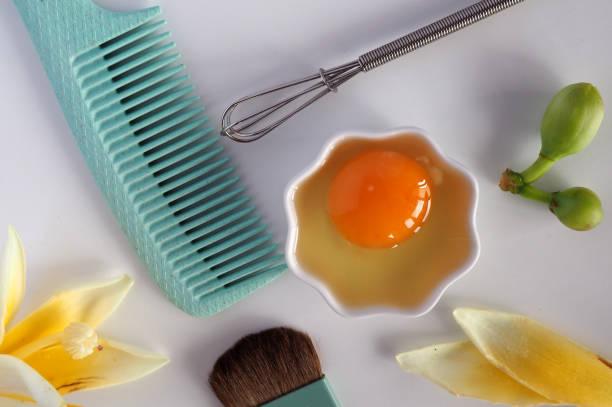
Beat 2 eggs together and add:
- 1 teaspoon of honey (all hair types)
- 1 or 2 tablespoons of rum (for normal to oily hair)
- The juice of one lemon (for normal to oily hair)
- 1 teaspoon vegetable oil (dry hair)
- Mix well, let sit for 2–3 minutes, and rinse with lukewarm water
How do you make deodorant with coconut?
All it takes is a few ingredients to make a homemade deodorant with coconut oil.
To make 200 ml of the final product, you will need:
- 100 g of¾ coconut oil liquid (you can heat the jar in a double boiler or leave it in the sun. It melts at temperatures above 25°)
- 60 g of baking soda
- 40 g of cornstarch
- 10 drops oflavender essential oil
- 10 drops ofpalmarosa essential oil
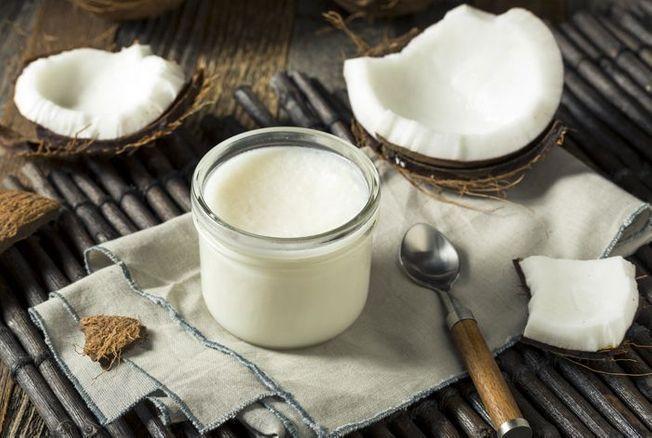
Gently melt the coconut oil if it is solid, then pour it into a clean, dry glass jar. Gradually add the baking soda and cornstarch, stirring thoroughly to prevent lumps.
Next, add the essential oils and mix again. Let the mixture set at room temperature if it's cool outside, or place it in the refrigerator for a short time.
Please note: Baking soda may irritate sensitive or recently waxed skin. If you experience any discomfort, discontinue use.
How do you make a body scrub with exotic scents?
A homemade scrub helps remove dead skin cells from the surface of the skin and leaves your skin feeling softer.
In a bowl, mix:
- 3 tablespoons of shredded coconut
- 1 tablespoon of honey
In another bowl, combine:
- 2 drops oftrue lavender essential oil
- 2 drops ofrose geranium essential oil
- 2 tablespoons ofapricot kernel oil
Combine the two mixtures. You can add a little vegetable oil to adjust the texture.
Apply to damp skin using gentle circular motions, without rubbing too hard, then rinse thoroughly.
How do you make a chocolate-orange lip balm?
To protect your lips from drying out, you can make your own lip balm using waxes, butters, and vegetable oils.
You will need:
- 2 g of candelilla wax
- 2 g coconut oil
- 2 g of cocoa butter
- 2 g of apricot kernel oil
- 2 g ofwheat germ vegetable oil
- 20 drops ofsweet orange essential oil
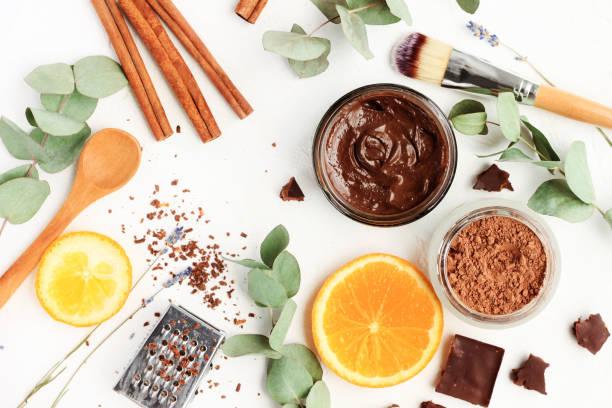
Melt the candelilla wax in a double boiler in a glass container. Add the coconut oil and cocoa butter, then stir to combine.
Let it cool slightly before stirring in the apricot kernel and wheat germ vegetable oils.
Once the mixture has cooled down, add the sweet orange essential oil, then quickly pour the mixture into a small, clean, dry jar before it sets.
How do you make a natural night cream?
To wrap things up, here's a very simple blend of vegetable oils designed to nourish the skin overnight.
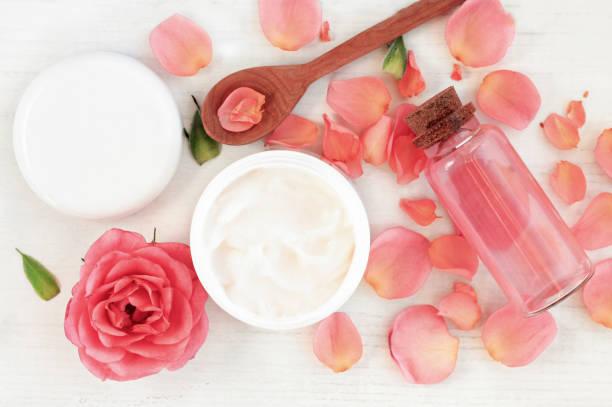
In a small glass jar (about 50 ml), mix together:
- ¾ coconut oil
- 1 capful ofrosehip vegetable oil
- 3 drops ofYlang-Ylang essential oil
- 1 drop of neroli essential oil
- 2 drops oflemon essential oil
Next, place the mixture in the refrigerator for a few hours.
Mix thoroughly, then refrigerate the mixture for a few hours to achieve a firmer texture.
Please note, however, that lemon essential oil is photosensitizing. This preparation should only be used in the evening, and you should avoid any exposure to UV rays after application.
Natural cosmetics: fewer ingredients, but still use with caution
Switching to natural cosmetics or making your own at-home skincare products can be a good way to simplify your routine and have more control over the ingredients you use. But “natural” doesn’t automatically mean “safe.”
Follow the recommended dosages, use thoroughly clean equipment, and exercise particular caution when handling essential oils. They can be irritating, allergenic, or photosensitizing, and some are not recommended for pregnant or breastfeeding women, young children, or people with certain health conditions.
When it comes to a daily skincare routine, the most important thing is actually quite simple: choose products that are right for your skin, learn to understand their ingredients, and avoid stockpiling products you don't really need.