Why Choose Natural Cosmetics for Skincare?
Moisturizer, serum, deodorant, shampoo, makeup… Cosmetics are such a part of our daily lives that we don’t always stop to think about what’s in them. Yet what we put on our skin deserves a little attention, too.
What do our skincare products actually contain? How can we make sense of an ingredients list that’s sometimes hard to understand? And most importantly, how can we choose natural cosmetics that are simpler and better suited to our skin’s needs? These are all questions that invite us to take a closer look at our bathrooms.
The Skin: An Absorptive Organ
Indeed, when you consider that the skin is an absorptive organ —that is, it passively absorbs cosmetic products. And that certain ingredients in conventional cosmetics are designed to penetrate the outermost layer of the skin in order to diffuse into the deeper layers.
So turning to more natural products makes perfect sense. Because, in theory, the compounds found in cosmetics shouldn't enter the bloodstream.
But unfortunately, the reality is different. According to some studies, cosmetics do not remain on the surface of our skin. It has now been proven that the ingredients in cosmetics enter the bloodstream and end up in our bodies:
- Parabens.
- Phthalates.
- Benzophenone.
- Or triclosan.
Here are some names we're familiar with because these products are known for the following reason: they interfere with the endocrine system.
Are natural cosmetics the answer?
Natural cosmetics have often been criticized on the grounds that consumers find them less effective than conventional cosmetics.
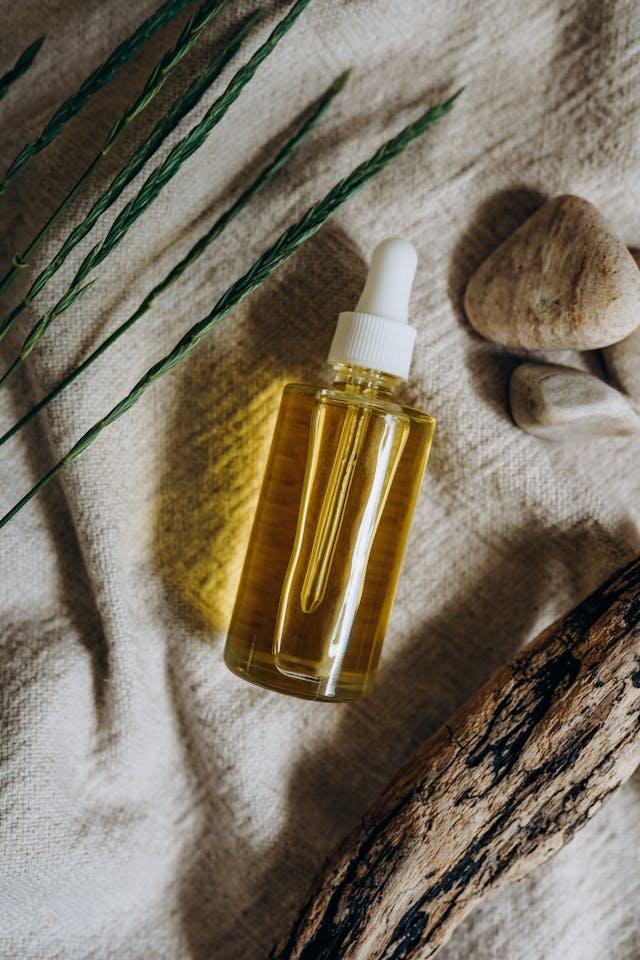
However, formulations based on plant extracts, vegetable oils, hydrosols, or even vegetable oils offer numerous benefits, such as nourishment, hydration, radiance, cell regeneration, or soothing sensitive skin.
So here's a two-fold argument: not only are they better for our health,
but
they're also effective and tailored to our skin's needs.
Natural sun protection that's good for your skin and the environment
We know that conventional sunscreen is responsible for the deterioration of aquatic flora and fauna. In fact, the toxic effects of sunscreen on coral are widely known.
So, once again, natural protection may be the solution for both skin health and environmental protection. To achieve this, it’s best to choose a sunscreen that contains only mineral sun filters. Since they aren’t absorbed by the skin, these filters act like a mirror, reflecting the sun’s UV rays.
Natural sunscreen is also less likely to cause allergic reactions on sensitive skin. These filters can be found in organic sunscreen productsor those designed for children.
In addition, organic cosmetics contain raw materials grown without GMOs, pesticides, or chemical fertilizers. And some are made exclusively from natural, organic French ingredients, to further reduce their carbon footprint and protect the environment.
Tips for Choosing the Right Natural Cosmetics
Natural and Organic Cosmetics They are, therefore, an alternative for taking care of your health and your skin. They generally do not contain parabens, PEGs, silicones, or other substances that are harmful to the body. Be careful, though: a natural and organic cosmetic product must contain at least 85% natural ingredients.
In fact, some manufacturers have no qualms about highlighting this "natural" trend, even though their products contain only a tiny amount of naturally derived ingredients and are mostly made up of synthetic ingredients.
Trust brands such as Lavera, Martina Gebhardt, Propos'Nature, and take the time to read the labels, as they provide accurate information.