Diese Wildwurzeln, die Sie ganz einfach verzehren können
Lange Zeit wurden essbare Wildwurzeln als Überlebensnahrung, Naturheilmittel oder Zutaten des täglichen Lebens genutzt; heute rücken sie wieder in den Vordergrund.
Sie sind reich an Nährstoffen, oft kostenlos und eng mit dem Wissen unserer Vorfahren verbunden – und begeistern Liebhaber des Wildkräutersammelns, der natürlichen Küche undeiner nachhaltigen Ernährung. Allerdings muss man wissen, wie man sie erkennt, zum richtigen Zeitpunkt erntet und richtig zubereitet.
Hier sind 5 essbare Wildwurzeln, die leicht zu erkennen sind und sich besonders gut dazu eignen, die Ernährung auf natürliche Weise zu bereichern.
Der Löwenzahn – eine entschlackende und köstliche Wurzel
Wo und wann sollte man die Löwenzahnwurzel ernten?
Den Löwenzahn ( ,) auf Wiesen, in Gärten, an Wegen und auf sonnigen Flächen. Die Wurzel wird hauptsächlich im Herbst oder im frühen Frühjahr geerntet, wenn die Nährstoffreserven am konzentriertesten sind.
Die Wurzel ist lang, außen dunkelbraun und innen weiß.
Wie verwendet man die Löwenzahnwurzel?
Once cleaned and cut into pieces, it can be dried and then roasted to make a caffeine-free beverage similar to coffee. It can also be added to soups or herbal teas.
Seit jeher wird die Löwenzahnwurzel geschätzt, da sie die Leber unterstützt und die Verdauung fördert.
Die Klette – eine sehr nährstoffreiche Wildwurzel
Wo wächst die Klette?
Burdock thrives in wastelands, along roadsides, and in nutrient-rich soil. It can grow quite tall, with large leaves and eye-catching purple flowers.
Die Ernte der Wurzel erfolgt idealerweise im ersten Jahr der Pflanze, im Herbst.
Wie man Klette zubereitet
Die Klettenwurzel hat einen leicht süßlichen und erdigen Geschmack. Sie wird gekocht, in der Pfanne gebraten, als Suppe oder als Püree verzehrt. In Japan ist sie unter dem Namen„Gobo“ sehr beliebt.
Sie ist reich an Ballaststoffen und Mineralstoffen und bekannt für ihre entgiftende und verdauungsfördernde Wirkung.
Wilder Meerrettich, eine anregende Wurzel
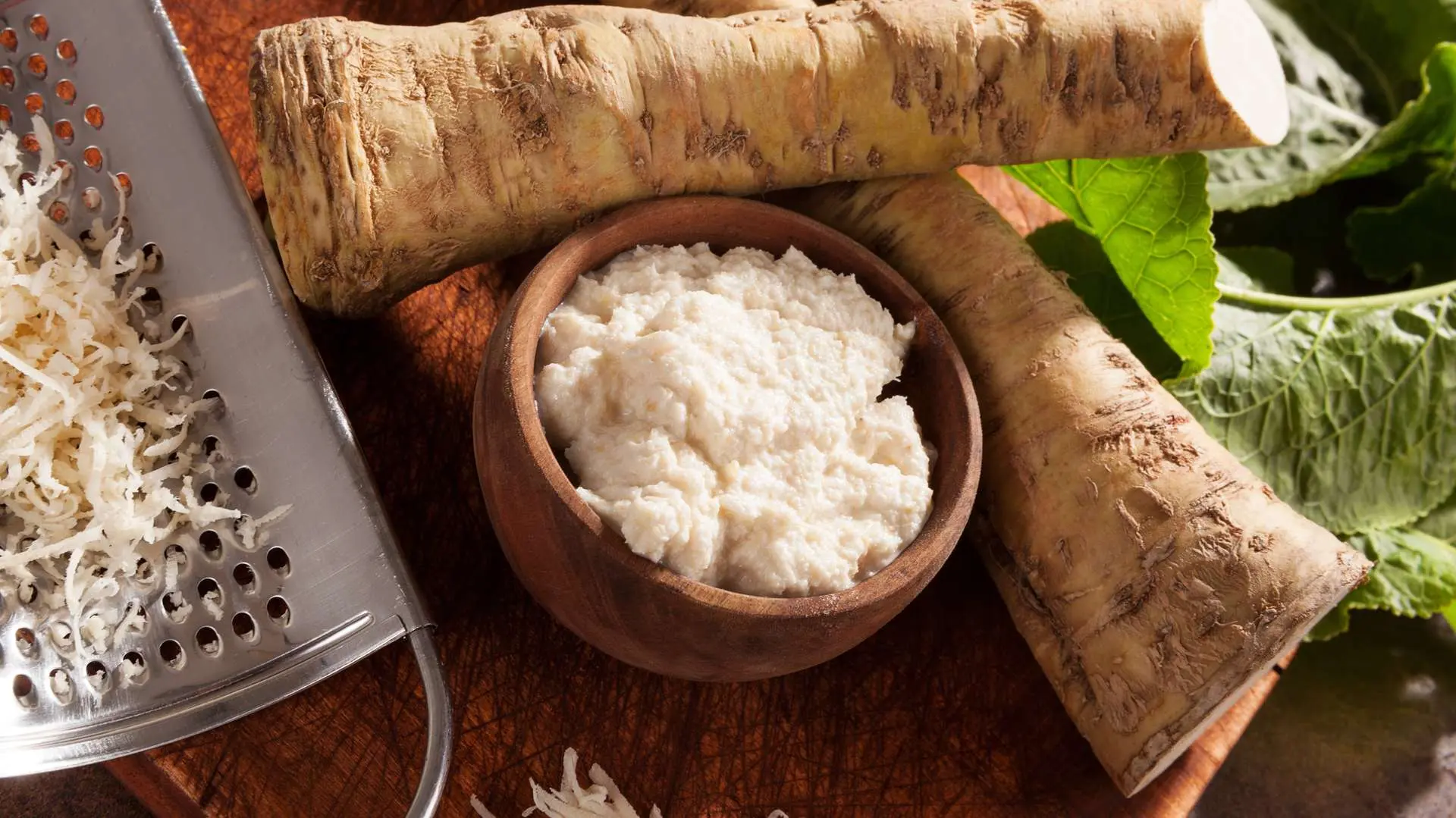
Wo findet man wilden Meerrettich?
Meerrettich wächst auf feuchten Böden, in der Nähe von Gräben oder an kühlen Standorten. Er wird vor allem im Herbst und Winter geerntet.
Sein Wurzelwerk kann sehr mächtig werden und tief im Boden verankert sein.
Wie man Meerrettich verzehrt
Meerrettich wird frisch in kleinen Mengen gerieben und zu Fisch, Gemüse oder Soßen gereicht. Sein intensiver Geschmack verleiht den Gerichten sofort eine besondere Note.
Da es sehr reich an Schwefelverbindungen ist, wird es traditionell zur Unterstützung der natürlichen Abwehrkräfte und die Atemwege zu befreien.
Die Wildmöhre – eine geschmacksintensive Vorfahrin
Wann sollte man die Wildmöhre ernten?
Man findet sie auf trockenen Wiesen, an Böschungen und an sonnigen Wegen. Die Ernte der jungen Wurzel erfolgt vor allem im ersten Wachstumsjahr.
Vorsicht jedoch: Die Wildmöhre ähnelt einigen giftigen Pflanzen aus der Familie der Doldenblütler. Eine sorgfältige Bestimmung ist unerlässlich.
Wie man die Wurzel verwendet
Die Wurzel kann jung roh verzehrt oder in Brühen und Gemüseeintöpfen gekocht werden. Ihr Geschmack ist aromatischer und intensiver als der von herkömmlichen Möhren.
Sie liefert Ballaststoffe und Antioxidantien und eine wunderbare Aromenvielfalt in die Wildküche.
Wild parsnip, a sweet and fragrant root
Wo wächst die wilde Pastinake?
It is found in meadows, wastelands, and along some less-traveled roadsides. It is usually harvested in the fall.
Wie bei der Wildmöhre ist große Vorsicht geboten, da einige verwandte Pflanzen giftig sein können.
Wie man Wildpastinaken zubereitet
Wild parsnips can be roasted in the oven, used in soups, mashed, or added to stews. They become tender when cooked.
Es ist sehr nahrhaft und enthält komplexe Kohlenhydrate, Kalium und Ballaststoffe, die für eine ausgewogene Ernährung wichtig sind.
Wichtige Tipps zum Sammeln von Wildwurzeln
Foraging in the wild always requires caution and respect for nature. It is essential to harvest only what you know well and to preserve plant populations by avoiding overharvesting.
Manche giftigen Pflanzen können essbaren Arten sehr ähnlich sehen. Im Zweifelsfall sollte man lieber davon Abstand nehmen oder sich von einem Botaniker oder einem erfahrenen Sammler begleiten lassen.
Es wird außerdem empfohlen, die Wurzeln vor dem Verzehr gründlich zu waschen und sie nur leicht zu garen, um ihre Nährwerte zu erhalten.